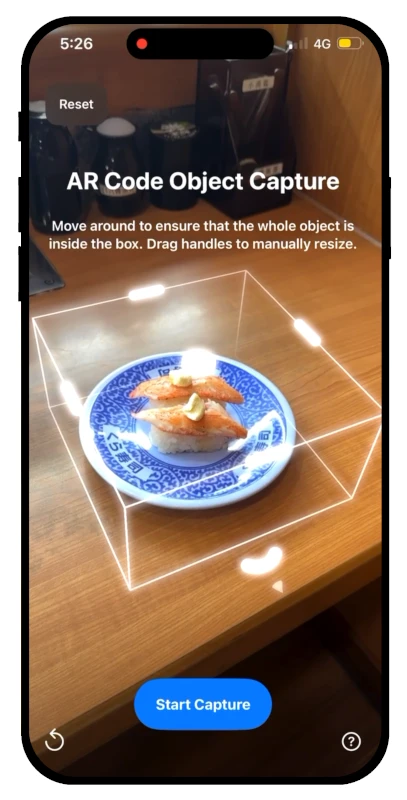
AR Code Object Capture
 AR Splat
 AR GenAI
 AI Code / AI Try-On
 AR Face Filter
 AR Video
 3D Files Upload
 AR Logo
 AR Photo
 AR Portal
 AR Text
 AR Data API
 Education & Schools
 E-commerce Brands & Online Stores
 Fitness & Sports Clubs
 Manufacturing, Training & Safety
 Marketing Teams & Agencies
 Museums & Exhibitions
 Real Estate & Property Marketing
 Restaurants & Cafés
 Retail Stores & Showrooms
 Smart Cities & Urban Development
 Books, Guides & Magazines
 Business Cards
 Event Posters & Banners
 Event Tickets & Access
 Flyers & Brochures
 Labels & Product Information
 Machinery & Equipment
 Product Packaging
 Websites & Online Stores
AR Storybooks for Children: Educative 3D Content and QR Codes
AR Code Tech | 24/11/2026 |
Augmented reality in children's books is receiving fresh attention from reading researchers. A study published in the September 2026 issue of the International Journal of Child-Computer Interaction suggests that carefully chosen AR content can give young readers useful context when a printed story has relatively few visual clues. The findings offer a practical design lesson for publishers: add digital material where it helps readers understand the story, not simply where an effect looks impressive.
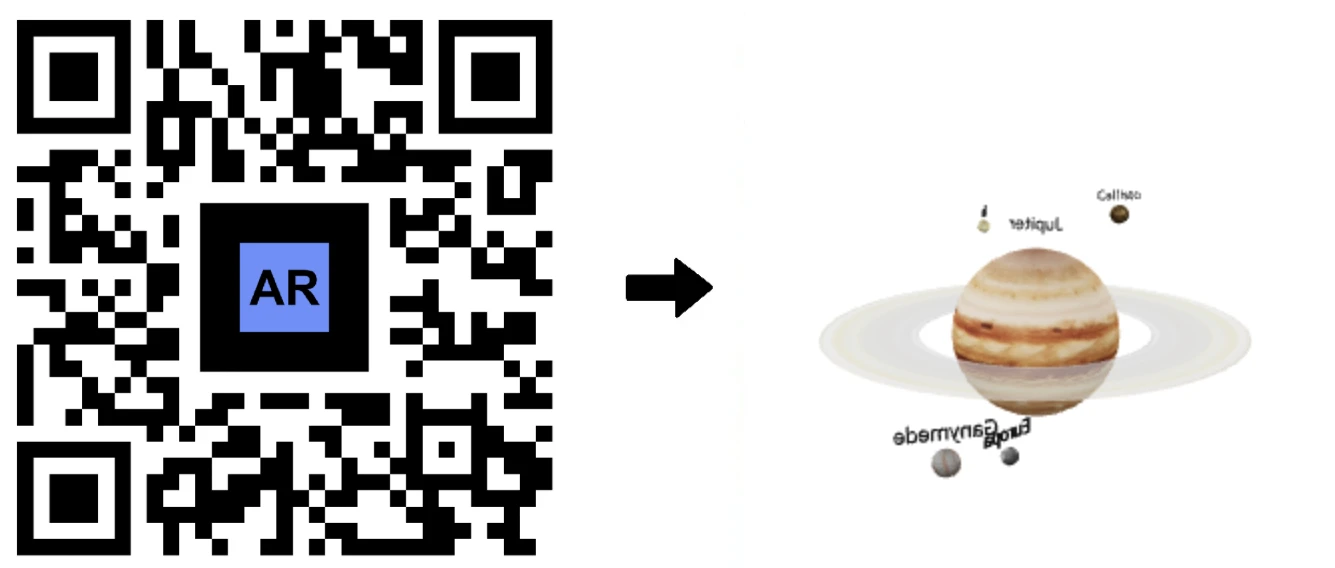
For children's publishers, educational content teams, and independent authors, AR QR Codes offer a way to connect physical pages with 3D illustrations or short videos. The printed book remains the main reading experience. The scan provides an optional explanation or visual example at a relevant moment.
What the 2026 AR Storybook Study Examined
The research paper, Augmented reality–enhanced storybooks as peritextual support: Children's reading experiences with low-peritext texts, was published in the journal's September 2026 volume. It involved 60 third-grade students at one public primary school during the 2024–2025 academic year.
The researchers compared students reading AR-enhanced storybooks with students reading traditional illustrated storybooks. Their pretest–posttest study combined reading-motivation surveys, attitudes toward AR books, and interviews with the children. It was quasi-experimental, rather than a large randomized trial.
The study focused on books with limited peritext: features surrounding a story that help readers interpret it, such as pictures and other visual or structural cues. The question was whether digital content could supply some of that missing support.
Key Findings: Reading Experience Improved, but Motivation Results Were Mixed
- No significant overall motivation increase: The study did not find a statistically significant improvement in total reading motivation attributable to the AR storybooks.
- More stable motivation: Motivation remained relatively stable in the AR group, while the comparison group's scores declined over time.
- More positive attitudes toward AR books: Children in the AR group reported improved attitudes toward that reading format, with the change sustained at follow-up.
- Different descriptions of reading: In interviews, AR-group students talked about enjoyment, engagement, understanding, and remembering the story; comparison-group students more often mentioned illustration and appearance.
These results should not be turned into a claim that AR automatically raises literacy scores or guarantees better comprehension. The sample came from one school, and the reported understanding and recall themes were drawn from interviews. The stronger conclusion is that thoughtful AR support may enrich how children experience a printed story.
What Publishers Can Learn From the Research
The most useful distinction is between adding spectacle and adding meaning. A floating character that looks interesting but contributes nothing to a scene may interrupt reading. A 3D view that explains an unfamiliar animal, place, or object can answer a question raised by the page.
For a publisher, this suggests choosing a small number of meaningful scan points rather than attaching AR to every spread. The best moment is often one where readers need context: a new setting, an unusual object, a difficult-to-picture event, or a detail that supports the plot.
Practical AR QR Code Ideas for Printed Storybooks
- 3D character or animal preview: Let readers inspect a relevant creature or object after it first appears in the story.
- Setting exploration: Show a model of a castle, ship, or historical building to clarify where the action happens.
- Short visual explanation: Add a brief video demonstrating an unfamiliar process mentioned in a nonfiction story or reading guide.
- End-of-chapter discovery: Offer an optional visual recap that encourages discussion without replacing the original text.
These are publishing concepts inspired by the research, not the particular AR activities tested in the study. Each should be checked for age suitability, content accuracy, reading flow, and ease of access.

How AR Code Supports Interactive Printed Books
AR Code has a dedicated books, guides, and magazines use case that connects printed materials to browser-based augmented reality through scannable AR QR Codes. Publishers can place a code near a passage or illustration so readers can open supporting digital content on a compatible smartphone or tablet without installing a dedicated AR app.
Two verified creation options are particularly relevant to illustrated publishing. AR GenAI can generate an AR-ready 3D model from an image, including certain character or artwork subjects; results should be checked against the original design. AR Video lets creators publish prepared video content through a scannable AR Code.
This is not identical to the custom AR storybooks used in the academic experiment. AR Code provides QR-triggered experiences; publishers should not assume that its standard workflow automatically recognizes illustrations or locks a 3D model to the exact printed page. The connection is the supported publishing use case: giving readers optional, relevant digital content through a physical book.
How to Plan an AR Storybook Pilot
- Identify one reading challenge: Choose a scene where young readers may struggle to visualize a setting, character, or object.
- Select the right media: Use a simple 3D model when spatial understanding matters, or a short AR Video when a sequence is easier to explain through movement.
- Keep the printed page complete: The story must make sense even when the reader does not scan.
- Add a clear instruction: Label the code with the benefit, such as “Scan to explore the dinosaur in 3D.”
- Test with actual readers: Check code size, lighting, page curvature, device compatibility, and whether the experience distracts from reading.
- Respect children's privacy: Avoid asking children for personal information and use appropriate adult supervision and privacy practices.

How Publishers Should Measure Success
A high scan count does not establish that a story is easier to understand. Publishing teams can monitor scan activity through AR Code's analytics, but should pair those numbers with reader feedback and simple, age-appropriate questions about the content. Does the digital element answer a genuine question? Can readers explain the scene afterward? Do they want to return to the printed text?
Testing a single illustrated title or short reading guide is a sensible starting point. Compare the AR-enhanced version with the ordinary page, collect feedback from caregivers or educators, and remove features that add friction without helping the reading experience.
AR Storybooks in 2026: Useful Support, Not a Replacement for Reading
The new research points toward a more thoughtful use of augmented reality in publishing. Its value may lie in helping readers imagine and interpret a scene, especially when the printed book gives them limited visual guidance. That is more specific, and more useful, than promising that every AR effect will boost motivation.
Publishers interested in testing that approach can explore AR Code's print-focused tools and start with one optional 3D or video experience. Keep the story central, the technology easy to access, and the outcome measurable through actual reader understanding and feedback.
Frequently Asked Questions
What did the 2026 augmented reality storybook study find?
A study of 60 third-grade students found no statistically significant overall increase in reading motivation, but the AR group showed more stable motivation and improved attitudes toward AR storybooks. Interview responses also suggested richer experiences of understanding and recall.
Can publishers add AR to an existing printed book?
Yes. Publishers can place AR QR Codes beside selected passages or illustrations and link them to compatible 3D or video experiences. Readers scan the code with a suitable mobile device; the printed book remains readable without scanning.
Does AR Code automatically animate a character on the printed page?
Not by default. AR Code supports QR-triggered AR experiences, including 3D models and AR Video, but a standard AR Code should not be described as automatically recognizing artwork or tracking the page itself.
What is the best way to test an AR children's book?
Start with one meaningful scan point, test it on intended devices, and observe whether children can return easily to the text. Combine scan analytics with age-appropriate reader feedback, and follow suitable privacy and adult-supervision practices.
AR Code Tech - Latest Blog Posts
Augmented Reality Fitness Training: AR QR Codes for Gyms

Augmented reality fitness training is gaining attention as gyms, sports clubs, and instructors look for more accessible ways to explain exercises and support their members. New research published on November 14, 2026, provides fresh insights into how exercise guidance can be designed around users' needs. The study,...
Augmented Reality Training in Manufacturing: New 2026 Research and Practical Factory Use Cases

Technicians can access equipment instructions directly by scanning a QR code on the machine. Instead of searching for printed manuals or relying on experienced operators, they can instantly view interactive 3D models and short visual guides that provide clear, step-by-step instructions for each task. On October 27,...
AR Code and NFCOP: The Future of NFC, QR Codes, AR & AI
The physical world is becoming a gateway to digital experiences. Augmented Reality (AR), Artificial Intelligence (AI), Near Field Communication (NFC), and QR Code technology now make it possible to connect products, printed materials, and physical locations to interactive content that people can access directly from...
Best 3D Scanning Solutions for Augmented Reality: AR Code Object Capture, AR GenAI, AR Splat & AI Code

Creating an effective augmented reality experience starts with choosing the right way to digitize an object or generate interactive content. Depending on the object you want to capture, its materials, the level of realism required, and the type of experience you want visitors to have, AR Code provides several...
Instantly Download .MP4 Demo Videos of Your AR 3D Models

In today's digital-first business environment, presenting 3D content efficiently is critical for standing out. AR Code delivers a powerful capability that enables users to download demo videos of their 3D models directly from the platform, significantly streamlining content creation for marketing, client...
AR GenAI: Turn a Single Photo into an AR-Ready 3D Model

Drive business growth with AR GenAI image to 3D technology on the AR Code SaaS platform. AR Code enables you to convert product photos into interactive, immersive 3D models, instantly accessible in Augmented Reality. No specialized apps or 3D modeling experience is necessary—simply upload an image and share...
AR Splat: A New 3D Scanning-to-Augmented Reality Solution Based on Gaussian Splatting

AR Splat by AR Code enables businesses to seamlessly create and deploy immersive 3D web augmented reality experiences. Upload a simple walk-around video and generate photorealistic 3D scenes with advanced Gaussian Splatting technology. Share your AR content instantly using AR QR Codes, providing fast,...
AI Code’s Image Generation Redefines Product Visualization Through a QR Code Scan

AR Code is revolutionizing Augmented Reality and Artificial Intelligence for businesses by enabling instant AI-powered product visualizations through a single QR code scan. Boost customer engagement and increase interaction by leveraging AI Code, ar genai, and other robust AR Code SaaS solutions for immersive...
AR Code Object Capture Now Works on All iPhones and iPads No LiDAR Required
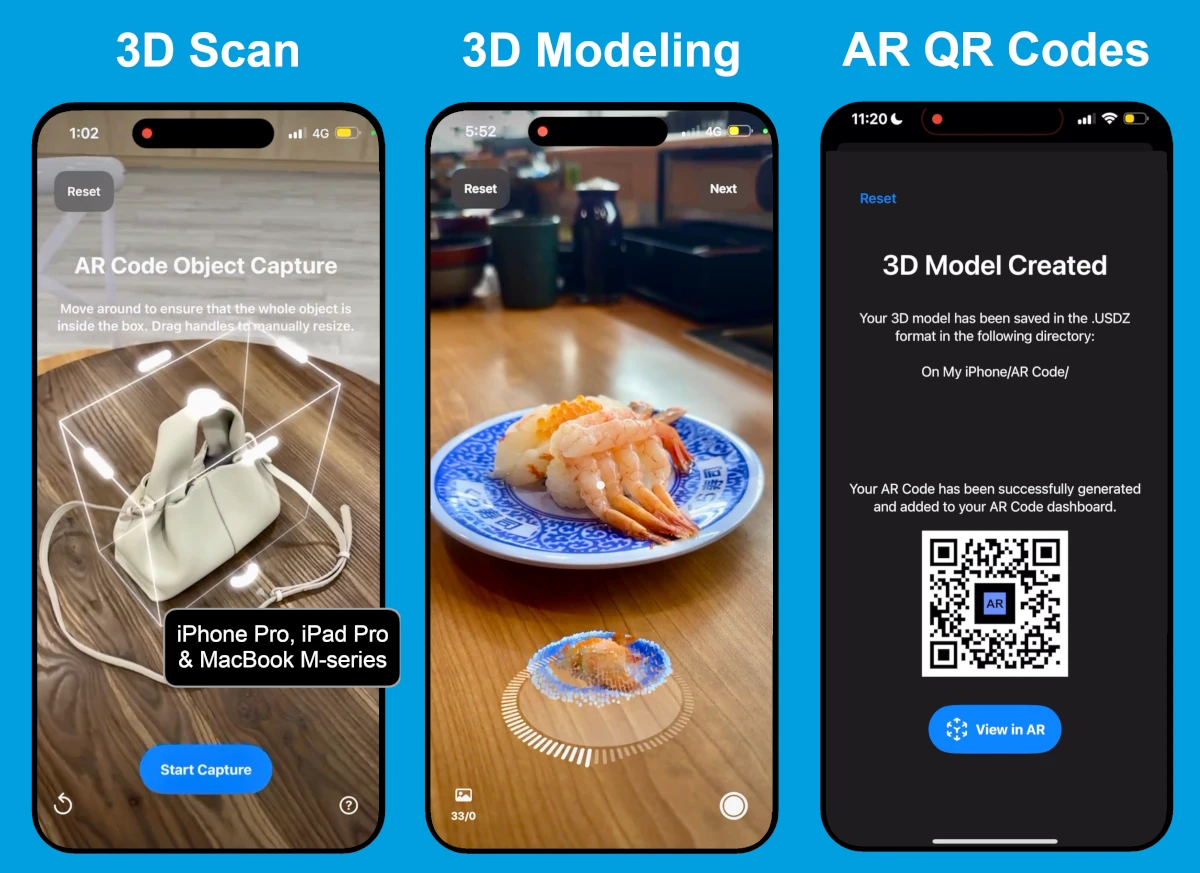
Accelerate business transformation with advanced augmented reality using the ar code object capture solution. Effortlessly capture, create, and share 3D models and AR QR Codes on any iPhone or iPad. Eliminate dependence on LiDAR and streamline your workflows with engaging AR marketing, lifelike product demonstrations,...
3D Scanning from Video Now Available on the AR Code Web Interface
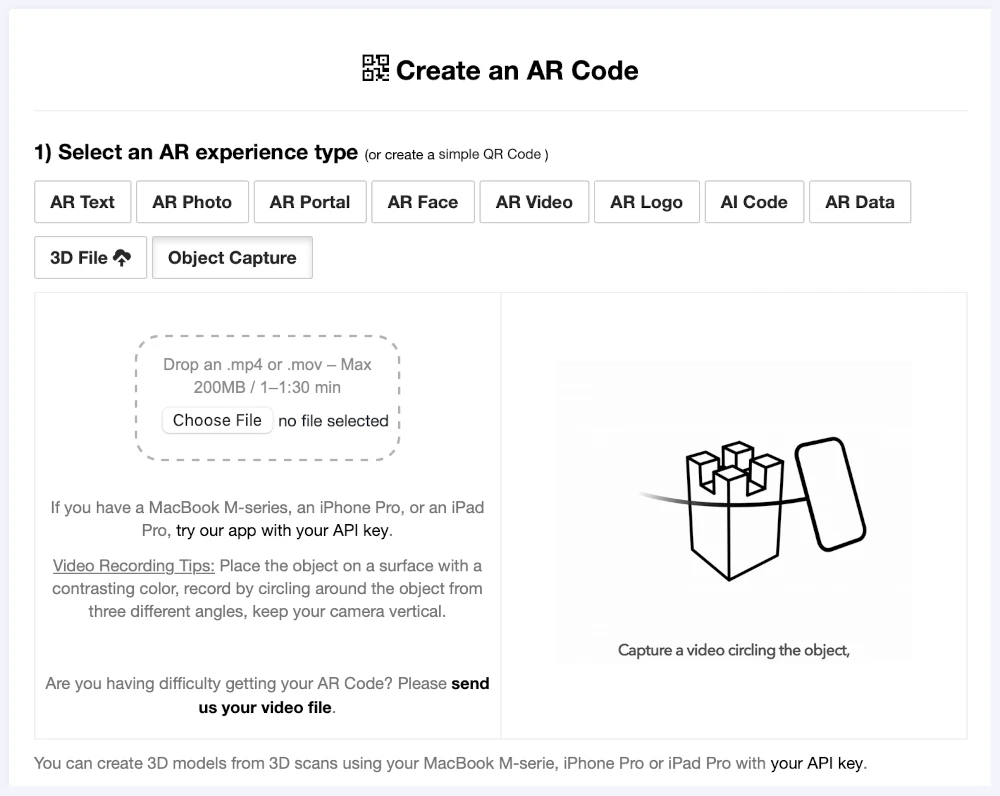
Accelerate business growth with Object Capture, a browser-based SaaS transforming simple video capture into immersive augmented reality. Boost brand engagement and streamline workflows with a no-code solution tailored for business. Simplify AR marketing for your business. Upload a short video through your...
164,454 AR experiences
75,240 Scans per day
149,758 Creators