AR Code Object Capture
 AR Splat
 AR GenAI
 AI Code / AI Try-On
 AR Face Filter
 AR Video
 3D Files Upload
 AR Logo
 AR Photo
 AR Portal
 AR Text
 AR Data API
 Education & Schools
 E-commerce Brands & Online Stores
 Fitness & Sports Clubs
 Manufacturing, Training & Safety
 Marketing Teams & Agencies
 Museums & Exhibitions
 Real Estate & Property Marketing
 Restaurants & Cafés
 Retail Stores & Showrooms
 Smart Cities & Urban Development
 Books, Guides & Magazines
 Business Cards
 Event Posters & Banners
 Event Tickets & Access
 Flyers & Brochures
 Labels & Product Information
 Machinery & Equipment
 Product Packaging
 Websites & Online Stores
Best 3D Scanning Solutions for Augmented Reality: AR Code Object Capture, AR GenAI, AR Splat & AI Code
AR Code Tech | 10/08/2026 |
Creating an effective augmented reality experience starts with choosing the right way to digitize an object or generate interactive content.
Depending on the object you want to capture, its materials, the level of realism required, and the type of experience you want visitors to have, AR Code provides several complementary solutions: Object Capture, AR Splat, AR GenAI, and AI Code.
Each technology addresses a different use case, from producing accurate 3D models of physical objects to generating immersive Gaussian Splatting scenes or AI-powered experiences from photographs.
These solutions can support a wide range of applications, including augmented reality for ecommerce and online stores, interactive retail and showroom experiences, and augmented reality for museums and exhibitions.
Here is how to choose the solution that best fits your project.
AR Code Object Capture: Create Accurate 3D Models from Real Objects
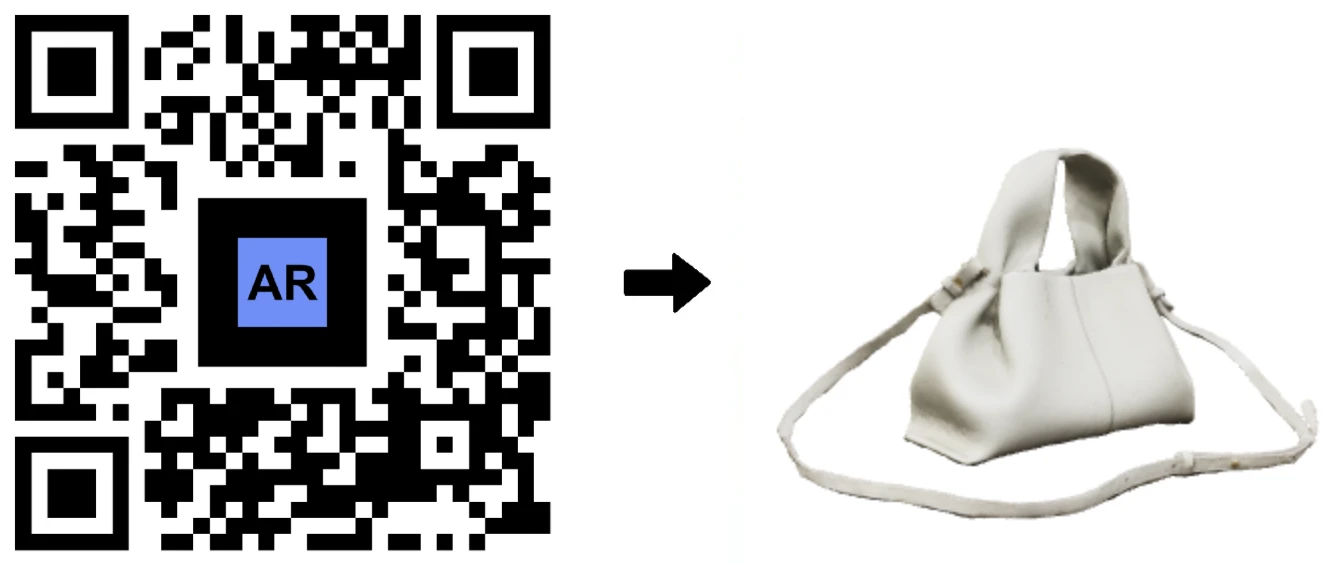
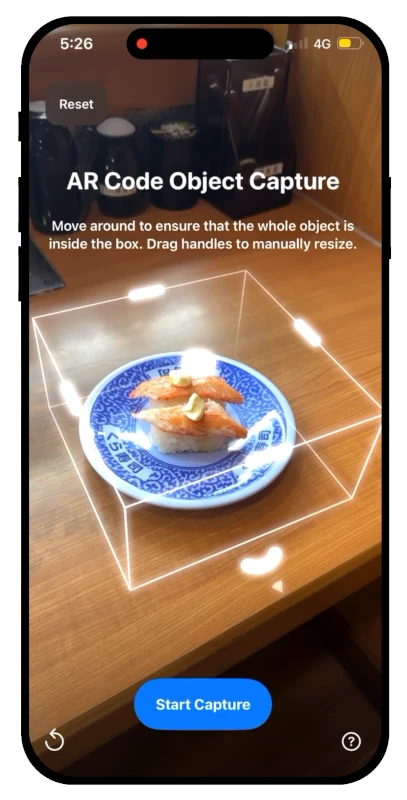
AR Code Object Capture for 3D scanning is our most widely used 3D scanning solution.
It enables you to generate a detailed 3D model of a physical object from a single video. Object Capture can be used directly through the AR Code platform or with our dedicated application for iOS, iPadOS, and macOS.
For the highest-quality results, we recommend using the application with an iPhone Pro or iPad Pro equipped with a LiDAR sensor. LiDAR-assisted capture helps provide additional spatial information during the scanning process and can improve the reconstruction of the object.
You can download and test the Object Capture 3D scanning application free of charge to evaluate the technology with your own objects.
What Types of Objects Work Best with Object Capture?
Object Capture is particularly effective when the physical object:
- Measures approximately 8 cm to 180 cm
- Has a non-reflective surface
- Is opaque rather than transparent or translucent
- Can be photographed clearly from multiple angles
For example, Object Capture can be an excellent solution for scanning sculptures, products, decorative objects, artifacts, furniture, prototypes, and many other physical items.
It can be particularly useful for creating immersive product visualizations for interactive product packaging, AR product labels and information, or augmented reality for machinery and equipment.
Once generated, the 3D model can become part of an augmented reality experience accessible through an AR QR Code.
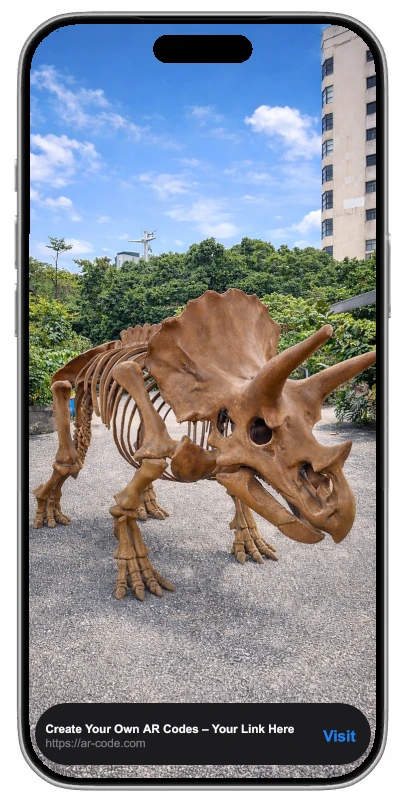
However, traditional photogrammetry can become more challenging when an object contains highly reflective, transparent, or translucent materials. In these situations, AR Splat may provide a more suitable alternative.
AR Splat: Capture Reflective and Transparent Objects
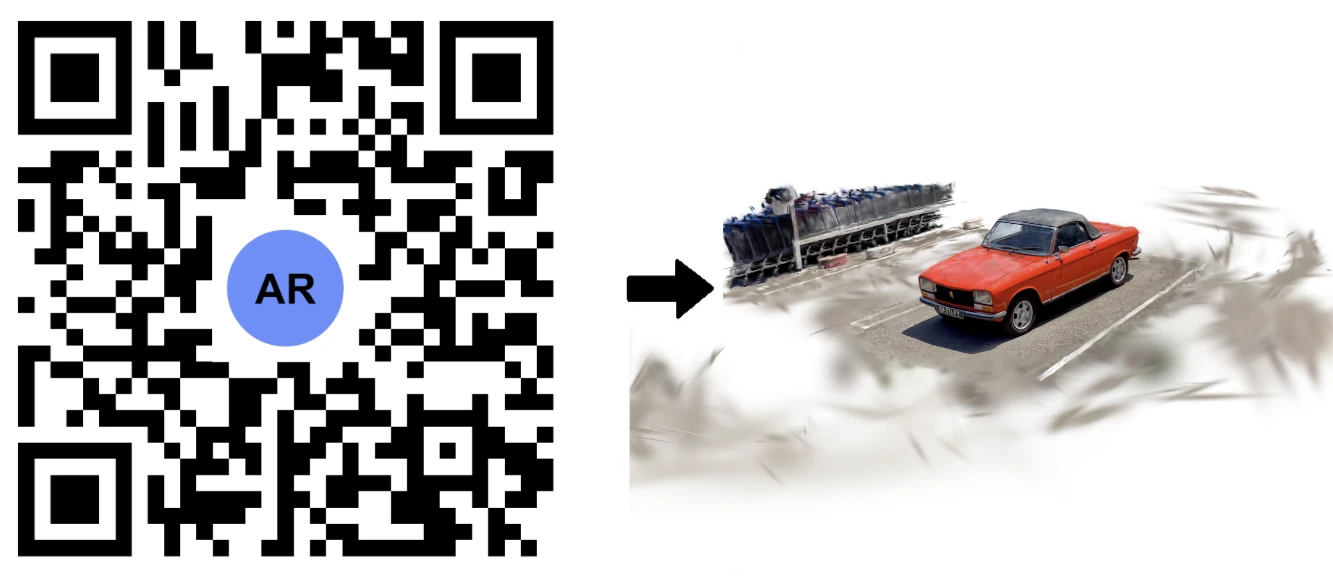
AR Splat Gaussian Splatting technology provides another approach to creating immersive 3D experiences.
Instead of generating a conventional polygon-based 3D model, AR Splat uses Gaussian Splatting technology to reconstruct the visual appearance of an object or scene.
This makes the technology particularly interesting for subjects that are difficult to reproduce using traditional 3D scanning methods.
AR Splat can work with:
- Reflective surfaces
- Transparent objects
- Translucent elements
- Complex materials
- Objects with detailed visual characteristics
Creating an AR Splat experience is straightforward. You record a single video while moving around the object, making sure to capture it from as many angles as possible. The video is then processed to create an immersive three-dimensional representation.
For objects involving materials such as glass, polished metal, glossy finishes, vehicles, or other surfaces that may be challenging for conventional photogrammetry, Gaussian Splatting can offer a compelling way to preserve their visual appearance.
This approach can also be useful for interactive showroom experiences where customers need to explore visually complex products in augmented reality.
Object Capture or AR Splat?
The choice depends primarily on the object and the desired result.
Use Object Capture when you need a conventional 3D model and the object has suitable dimensions, solid surfaces, and limited reflections.
Use AR Splat when visual realism is particularly important or when the object includes reflective, transparent, or translucent components that are difficult to reconstruct as a traditional 3D mesh.
Together, the two technologies make it possible to digitize a much broader range of real-world objects.
AR GenAI: Generate a 3D Rendering from a Single Photograph

Not every augmented reality project requires a complete physical scan.
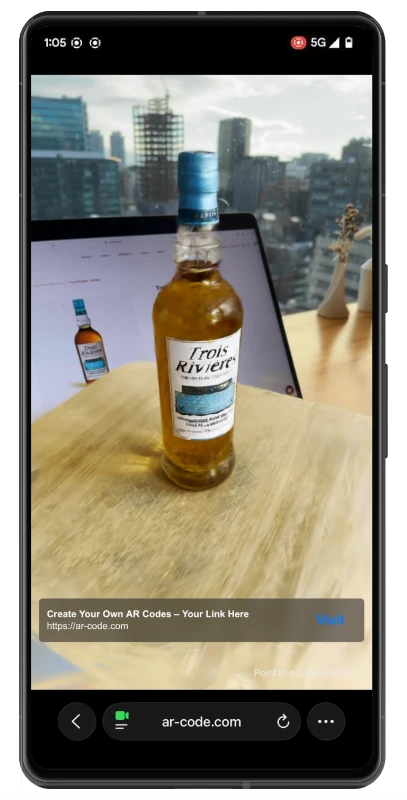
AR GenAI for AI-powered 3D model generation uses generative artificial intelligence to produce a 3D rendering from a single photograph.
Instead of capturing the object from every angle, you provide one image. AI analyzes the visible characteristics of the object and predicts how the parts that cannot be seen in the original photograph should appear.
This can dramatically simplify the process of creating 3D content, particularly when producing large numbers of product visualizations for ecommerce brands and online stores.
When Does AR GenAI Work Best?
AR GenAI is particularly well suited to objects that are:
- Common or easily recognizable
- Relatively symmetrical
- Consistent in shape
- Uniform in texture and color
These characteristics give the generative AI more information from which to infer the invisible sides of the object.
For example, a chair, bottle, piece of furniture, simple product, decorative item, food item, or similarly recognizable object may be suitable for AI-based 3D generation.
AR GenAI can be particularly practical for food-related content, where obtaining a clean conventional 3D scan may be more difficult. This makes it an interesting option for augmented reality experiences for restaurants and cafés.
Because AR GenAI needs only a single photograph, it can also be useful when the physical object is no longer available for a complete 3D scan.
The fundamental difference is that Object Capture reconstructs an object from multiple visual observations, while AR GenAI generates the missing three-dimensional information using artificial intelligence.
For projects where speed and simplicity are more important than exact physical reconstruction, AR GenAI provides an efficient alternative.
AI Code: Create Interactive Generative AI Experiences
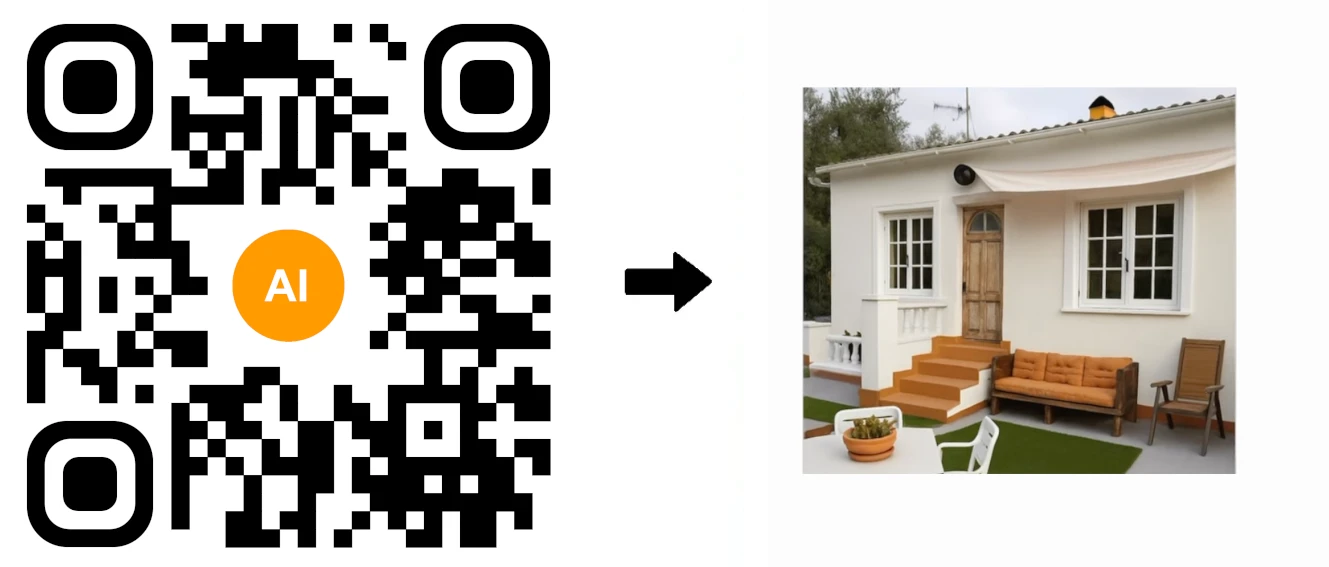
AI Code for generative augmented reality experiences takes a different approach.
Rather than focusing on the 3D reconstruction of an object, AI Code adds generative artificial intelligence directly to the visitor experience.
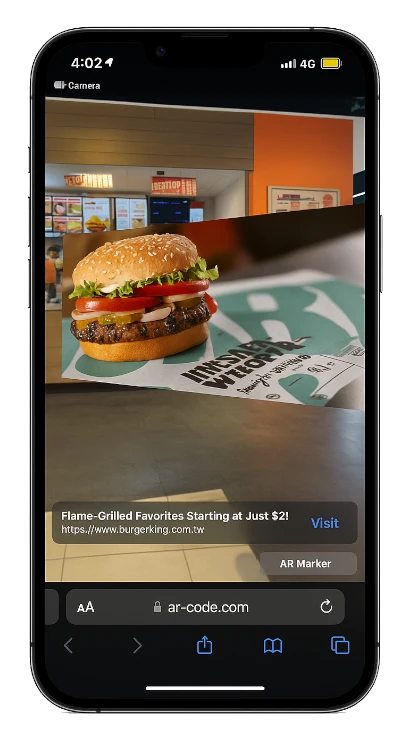
Each time an AR QR Code is scanned, the visitor can be invited to take a photograph. Artificial intelligence then processes that photograph according to instructions defined by the creator of the experience.
The resulting content can be generated as text or imagery.
This makes it possible to create personalized experiences where the result can be different for every visitor.
Example: Bringing a Museum Exhibit to Life
Imagine a museum displaying a vintage automobile.
An AI Code can be positioned alongside the exhibit. Visitors scan the AR QR Code and are prompted to photograph the vehicle.
The AI can then generate a new image showing people dressed in clothing from the historical period when the automobile was released.
Instead of simply viewing an exhibit, visitors participate in a contextual and personalized experience connecting the physical object with its historical environment.
This type of interactive storytelling is particularly relevant for museums and exhibition augmented reality experiences, where AI can add educational, historical, and personalized layers to physical exhibits.
The same concept can be adapted to cultural institutions, tourism, augmented reality in education and schools, events, retail experiences, exhibitions, and many other environments.
The creator defines the AI instructions, while each visitor's photograph becomes the starting point for a new result.
Recommended AR Code Solution by Object Type
The most suitable solution depends on the object's materials, geometry, size, visual complexity, and the type of augmented reality experience you want to create.
| Object or Use Case | Recommended Solution | Why |
|---|---|---|
| Furniture, Various Everyday Objects | AR Code Object Capture, AR Splat, or AR GenAI | The best solution depends on the object. Object Capture is ideal for conventional 3D scanning, AR Splat for visually complex or reflective materials, and AR GenAI when working from a single photograph. |
| Car, Vehicle | AR Splat | Vehicles typically combine reflective paint, glass, chrome, and complex surfaces. Gaussian Splatting is particularly well suited to reproducing these visual characteristics. |
| Translucent or Highly Reflective Object | AR Splat | Recommended for glass, polished metal, glossy surfaces, and objects containing transparent or translucent elements that can be difficult to reconstruct with traditional photogrammetry. |
| Food | AR GenAI Recommended | Food can be difficult to scan consistently, while generative AI can efficiently create convincing 3D representations from a single photograph. |
| Storytelling / Interactive Experiences | AI Code | AI Code is designed for personalized experiences in which visitors provide a photograph and receive dynamically generated text or imagery based on predefined instructions. |
This table provides a useful starting point, but the optimal solution can vary depending on the object's size, materials, geometry, surface properties, and intended AR experience.
Which AR Code Technology Should You Use?
The four solutions address different objectives in augmented reality content creation.
- Choose Object Capture for 3D scanning when you have access to a physical object and want to create an accurate, conventional 3D model from multiple viewpoints.
- Choose AR Splat for Gaussian Splatting when the subject contains reflective, transparent, translucent, or visually complex materials and you want to reproduce its appearance through Gaussian Splatting.
- Choose AR GenAI for AI-generated 3D content when you only have a single photograph, or when you want a fast AI-assisted way to generate a three-dimensional representation of a relatively predictable object.
- Choose AI Code for interactive AI experiences when the objective is to create a dynamic and personalized generative AI experience for each visitor.
These technologies can also complement one another. A project may use 3D scanning to reproduce physical objects while using AI Code to add interactive storytelling or personalized content around them.
Explore AR Portal and AR Photo for Other AR Experiences
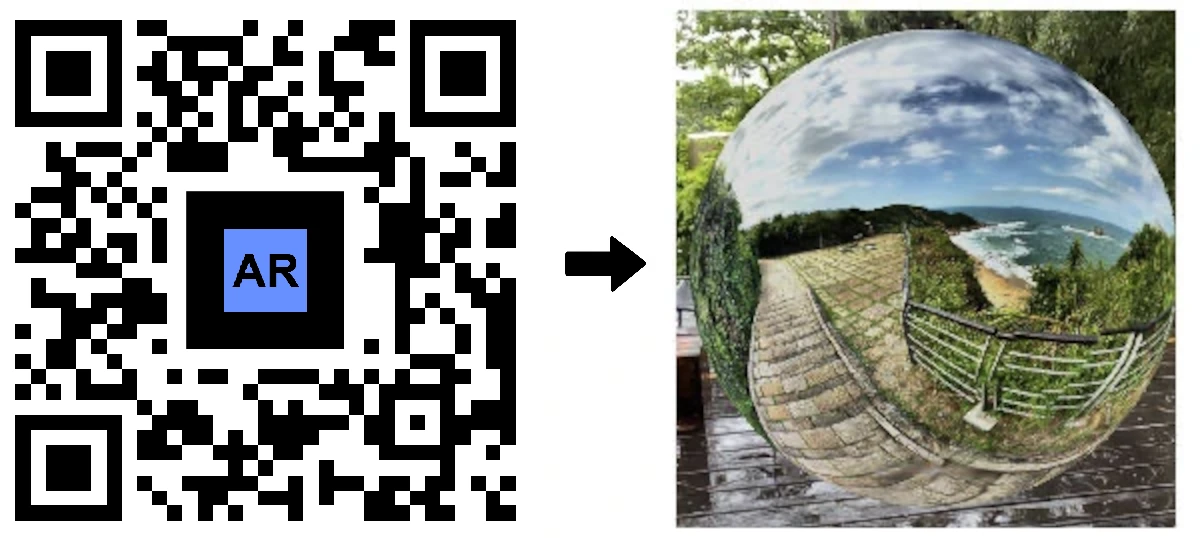
For other types of augmented reality experiences, AR Code also provides dedicated solutions. For 360° immersive AR experiences, you can explore the AR Portal solution for immersive 360° augmented reality, which allows users to enter and discover panoramic environments directly in augmented reality.
For paintings, posters, photographs, artwork, and other 2D visual content, the AR Photo solution for augmented reality images and paintings offers an effective way to transform static visuals into interactive augmented reality experiences.
AR Photo can also be incorporated into printed media such as books, guides, and magazines with augmented reality, interactive flyers and brochures, or AR-enabled event posters and banners.
From Physical Objects to Interactive AR Experiences
3D scanning and artificial intelligence are expanding what can be created with augmented reality.
A physical product can become a digital 3D model. A difficult-to-scan reflective object can become an immersive Gaussian Splatting experience. A photograph can become a generative 3D rendering. And an AR QR Code can transform a visitor's own photograph into personalized AI-generated content.
With Object Capture, AR Splat, AR GenAI, and AI Code, AR Code provides several approaches so creators can select the technology that matches their object, content, and audience.
Combined with solutions such as AR Portal for immersive 360° environments and AR Photo for paintings and 2D visual content, the AR Code platform provides a flexible set of tools for connecting physical content with interactive digital experiences directly through augmented reality.
Frequently Asked Questions
What is the best 3D scanning solution for augmented reality?
The best 3D scanning solution depends on the object you want to digitize. AR Code Object Capture is recommended for opaque, non-reflective objects between approximately 8 cm and 180 cm. For reflective, transparent, translucent, or visually complex objects, AR Splat with Gaussian Splatting is generally the better option. If you only have a single photograph, AR GenAI can generate a 3D rendering using artificial intelligence.
Can reflective or transparent objects be scanned in 3D?
Yes. Reflective, transparent, and translucent objects can be particularly challenging for traditional photogrammetry, so we recommend using AR Splat Gaussian Splatting technology. AR Splat processes a video recorded while moving around the object and can reproduce complex visual characteristics such as glass, polished metal, glossy surfaces, and reflections.
Can I create a 3D model from a single photograph?
Yes. AR GenAI creates AI-generated 3D models from a single photograph. It works particularly well with recognizable, relatively symmetrical objects that have consistent shapes, textures, and colors. This makes it a convenient solution for products, furniture, decorative objects, and food when a complete 3D scan is not available.
What is the best AR solution for scanning cars and motorbikes?
For cars and motorbikes, AR Splat is generally recommended because vehicles contain reflective paint, glass, chrome, polished metal, and complex geometry. Gaussian Splatting can preserve these visual characteristics more effectively than conventional photogrammetry, making it particularly suitable for interactive AR showroom experiences.
How can AI Code be used for augmented reality storytelling?
AI Code creates personalized generative AI experiences triggered by an AR QR Code. Visitors can be asked to take a photograph, which is then processed according to instructions defined by the creator. The result can be generated as text or imagery, making AI Code particularly useful for interactive storytelling, education, cultural experiences, and augmented reality in museums and exhibitions.
Which AR Code solution should I use for 360° environments or paintings?
For immersive 360° environments, panoramic spaces, and virtual visits, use the AR Portal solution for 360° augmented reality. For paintings, photographs, posters, artwork, and other 2D visual content, AR Photo can transform static images into interactive augmented reality experiences accessible through an AR QR Code.
AR Code Tech - Latest Blog Posts
Instantly Download .MP4 Demo Videos of Your AR 3D Models
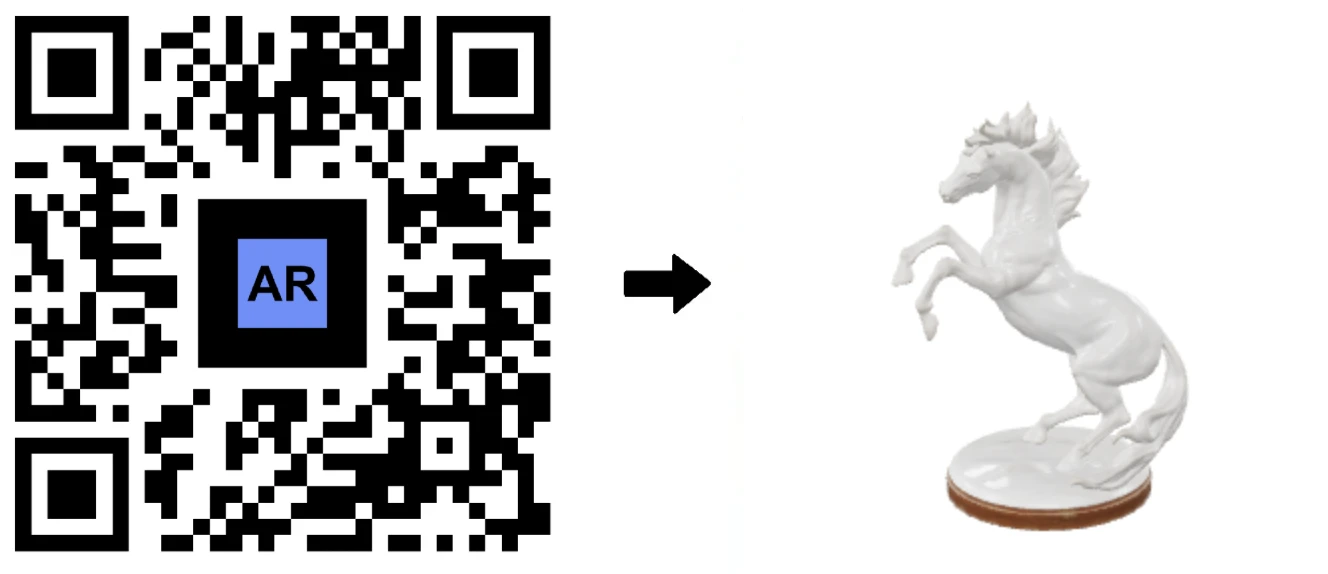
In today's digital-first business environment, presenting 3D content efficiently is critical for standing out. AR Code delivers a powerful capability that enables users to download demo videos of their 3D models directly from the platform, significantly streamlining content creation for marketing, client...
AR GenAI: Turn a Single Photo into an AR-Ready 3D Model

Drive business growth with AR GenAI image to 3D technology on the AR Code SaaS platform. AR Code enables you to convert product photos into interactive, immersive 3D models, instantly accessible in Augmented Reality. No specialized apps or 3D modeling experience is necessary—simply upload an image and share...
AR Splat: A New 3D Scanning-to-Augmented Reality Solution Based on Gaussian Splatting
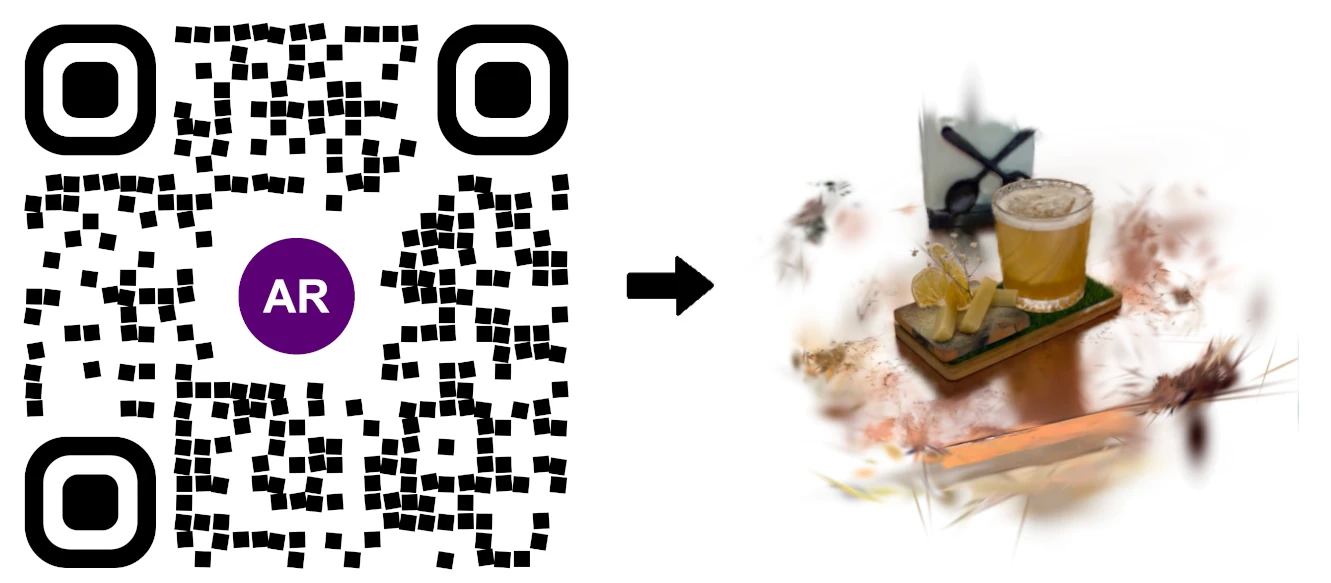
AR Splat by AR Code enables businesses to seamlessly create and deploy immersive 3D web augmented reality experiences. Upload a simple walk-around video and generate photorealistic 3D scenes with advanced Gaussian Splatting technology. Share your AR content instantly using AR QR Codes, providing fast,...
AI Code’s Image Generation Redefines Product Visualization Through a QR Code Scan

AR Code is revolutionizing Augmented Reality and Artificial Intelligence for businesses by enabling instant AI-powered product visualizations through a single QR code scan. Boost customer engagement and increase interaction by leveraging AI Code, ar genai, and other robust AR Code SaaS solutions for immersive...
AR Code Object Capture Now Works on All iPhones and iPads No LiDAR Required
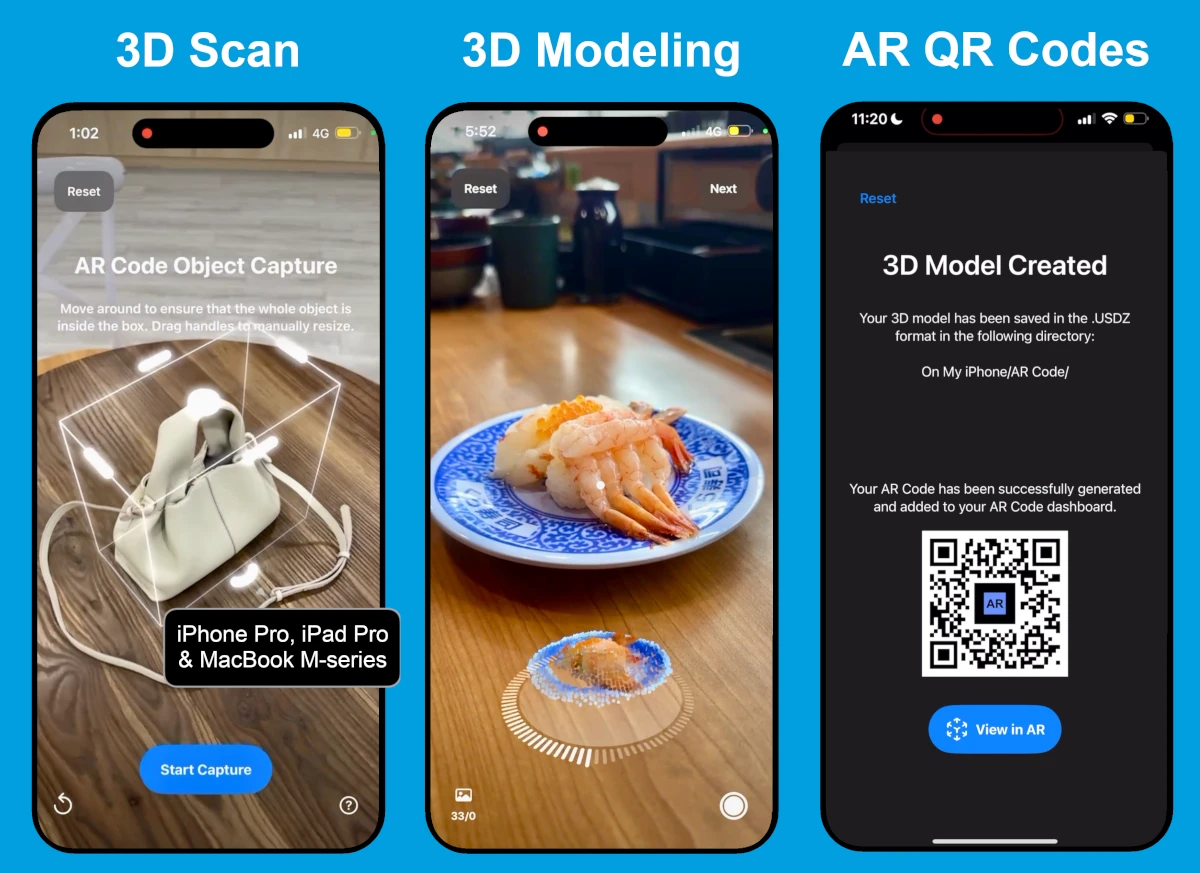
Accelerate business transformation with advanced augmented reality using the ar code object capture solution. Effortlessly capture, create, and share 3D models and AR QR Codes on any iPhone or iPad. Eliminate dependence on LiDAR and streamline your workflows with engaging AR marketing, lifelike product demonstrations,...
3D Scanning from Video Now Available on the AR Code Web Interface
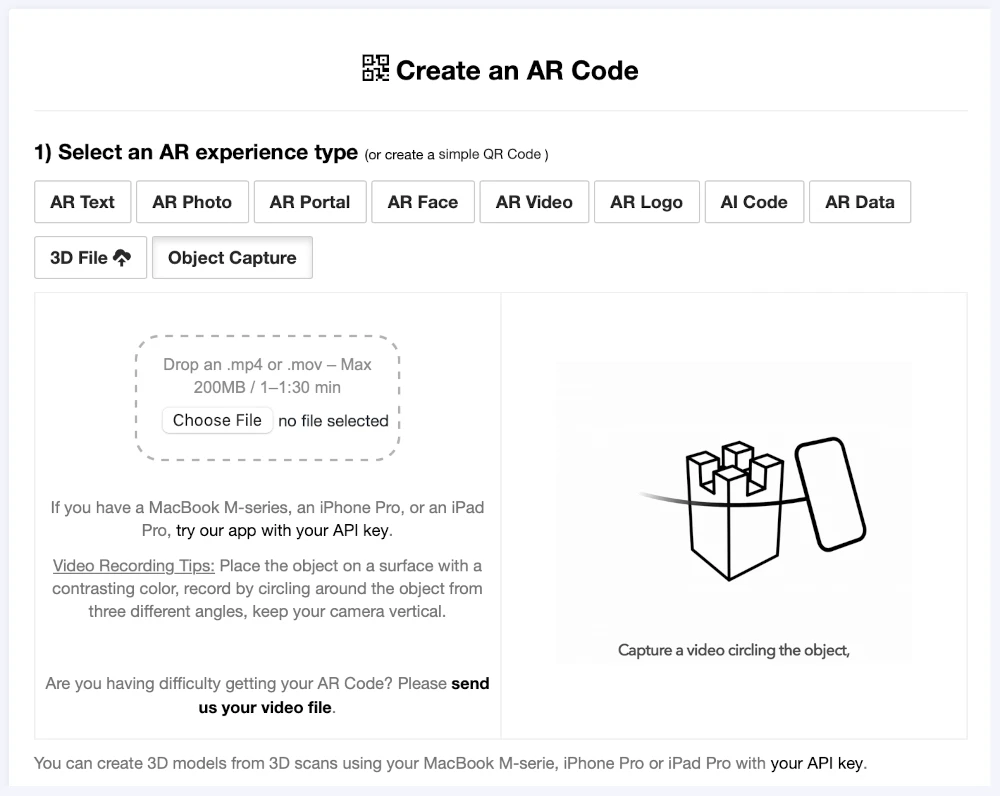
Accelerate business growth with Object Capture, a browser-based SaaS transforming simple video capture into immersive augmented reality. Boost brand engagement and streamline workflows with a no-code solution tailored for business. Simplify AR marketing for your business. Upload a short video through your...
Guide to 3D Scanning with Our "AR Code Object Capture" Solution
Drive your business’s digital transformation with ar code object capture, the leading SaaS platform for advanced 3D scanning and interactive augmented reality. Empower your organization to deliver accurate 3D models for marketing, e-commerce, manufacturing, and product demonstrations. Accelerate engagement and...
From Video to 3D Modeling: Photogrammetry with AR Code Object Capture on MacBook M-Series
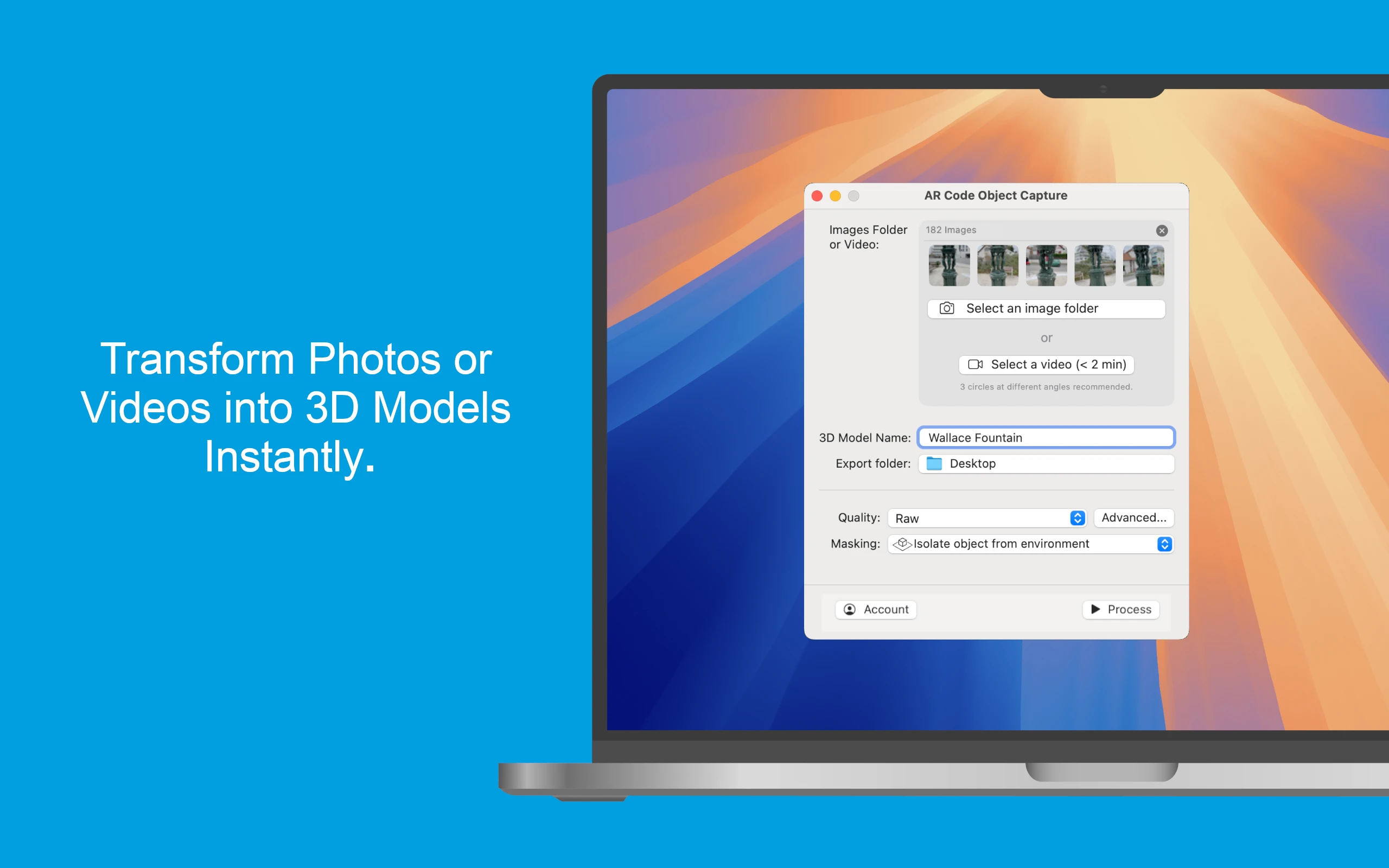
Drive business success with the powerful AR Code Object Capture app, the cutting-edge 3D scanning and augmented reality SaaS platform for modern enterprises. Built for MacBook M-series (macOS 15.0+), this solution effortlessly converts physical products into lifelike 3D models and shareable AR QR Codes in seconds....
Personalize Your AR Codes with Innovative Design Options
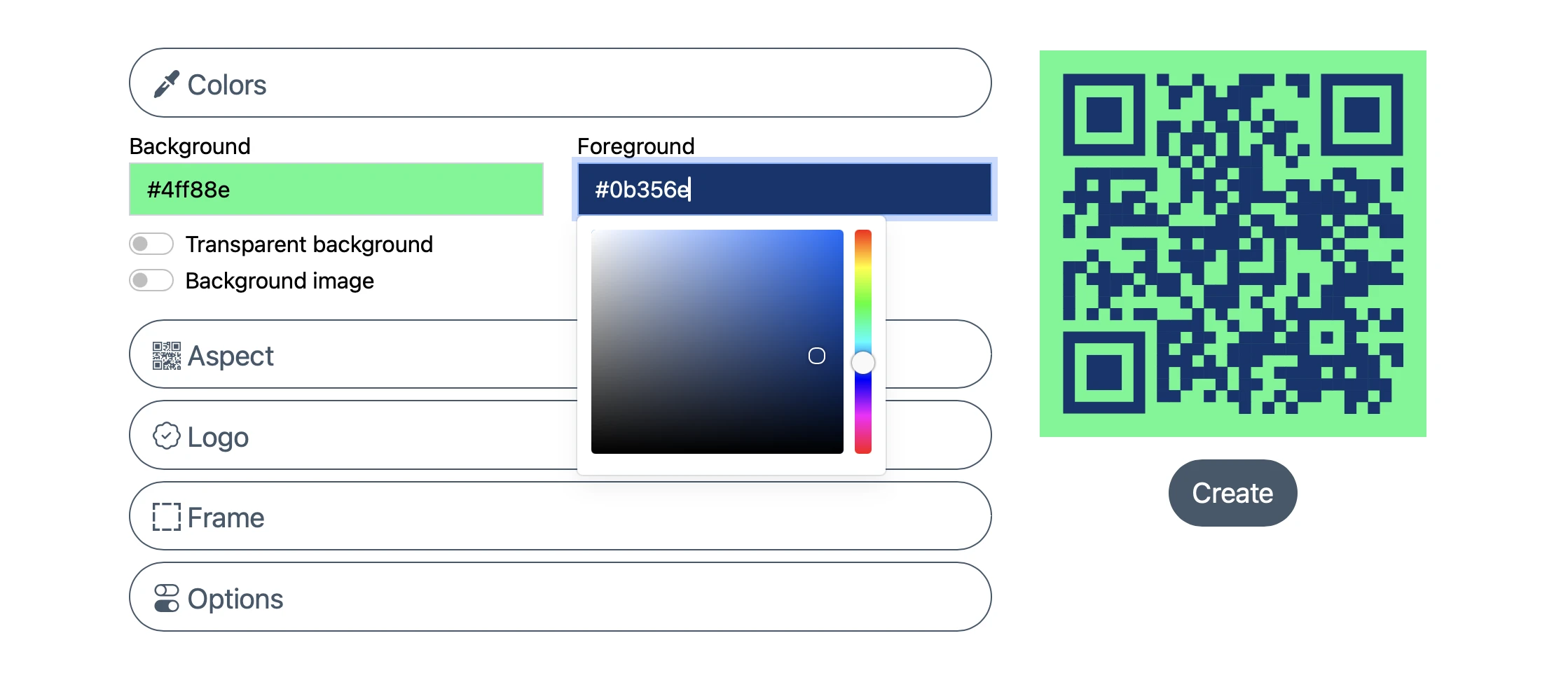
AR Codes are transforming business engagement by connecting physical products, printed materials, and digital content with dynamic augmented reality experiences. The AR Code SaaS platform empowers brands with advanced AR Code customization, surpassing traditional QR codes. These cutting-edge solutions elevate brand...
AR Code's Low-Power SLAM: Augmented Reality for Everyone, Everywhere
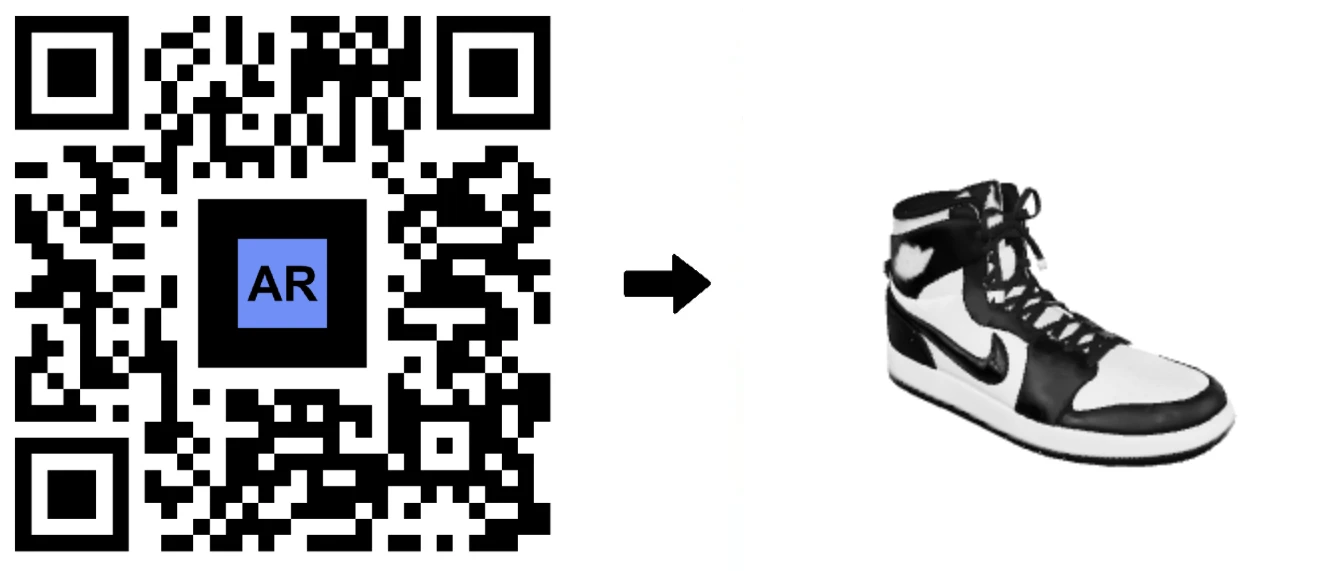
Accelerate your business growth using AR Code, a leading SaaS platform for web-based Augmented Reality solutions. AR Code empowers businesses to create dynamic AR experiences accessible across all smartphones and tablets, instantly unlocking new opportunities for brand engagement and reach. Harness low-power SLAM...
158,678 AR experiences
70,227 Scans per day
146,634 Creators