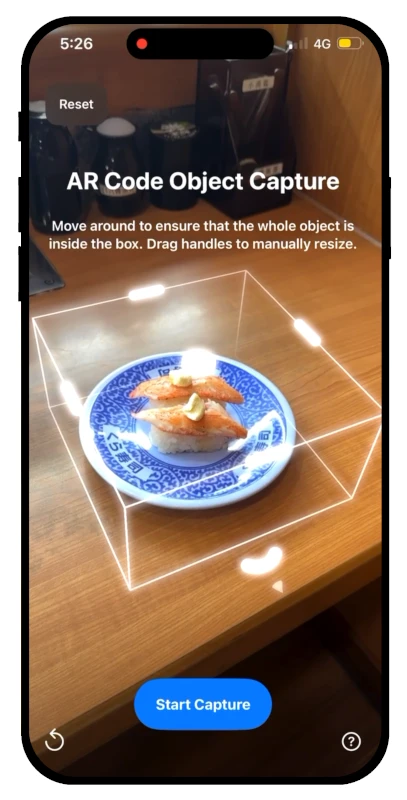
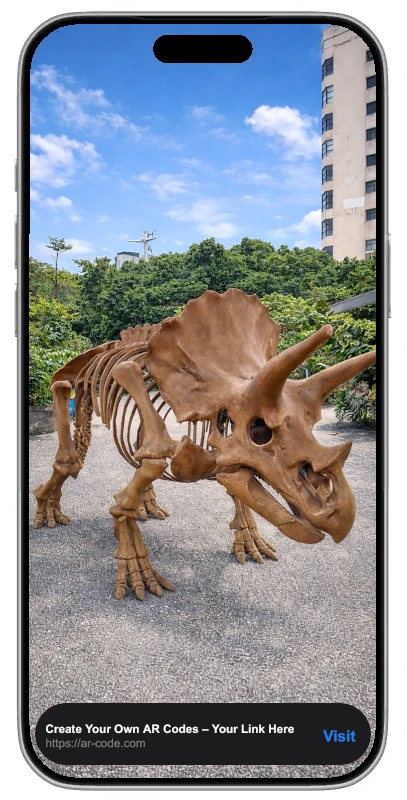
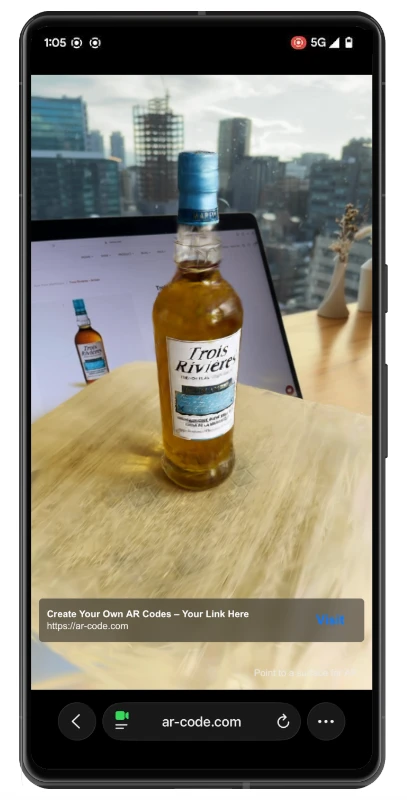
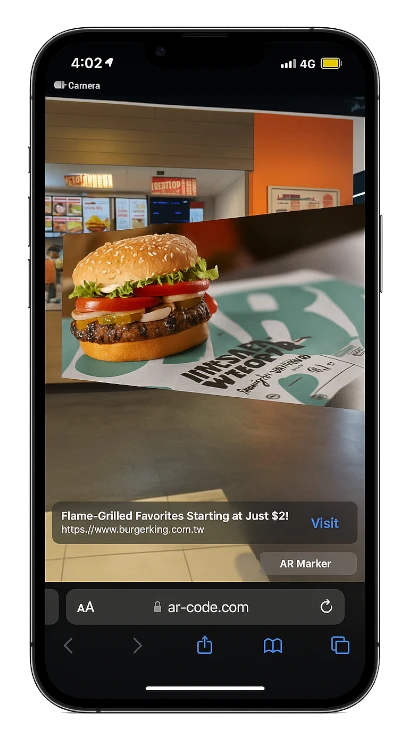
AR Code Object Capture
 AR Splat
 AR GenAI
 AI Code / AI Try-On
 AR Face Filter
 AR Video
 3D Files Upload
 AR Logo
 AR Photo
 AR Portal
 AR Text
 AR Data API
 Education & Schools
 E-commerce Brands & Online Stores
 Fitness & Sports Clubs
 Manufacturing, Training & Safety
 Marketing Teams & Agencies
 Museums & Exhibitions
 Real Estate & Property Marketing
 Restaurants & Cafés
 Retail Stores & Showrooms
 Smart Cities & Urban Development
 Books, Guides & Magazines
 Business Cards
 Event Posters & Banners
 Event Tickets & Access
 Flyers & Brochures
 Labels & Product Information
 Machinery & Equipment
 Product Packaging
 Websites & Online Stores
Mobile-Web 3D Heritage: the Potential of AR Code Gaussian Splatting
WebAR | 03/11/2026 |
A new study published on November 1, 2026, highlights an important development in digital cultural heritage: detailed 3D reconstructions of historic buildings can be delivered through ordinary mobile browsers using optimized Gaussian splatting technology.
Published in npj Heritage Science, the research examined how 3D Gaussian Splatting (3DGS) performs when presenting architectural heritage on mobile devices. The findings offer useful evidence for museums, tourism organizations, and cultural institutions seeking more accessible ways to share historic places digitally.
For organizations exploring augmented reality, the study is particularly relevant to the growing use of browser-based 3D experiences and AR QR Codes. These technologies can help connect physical landmarks, printed guides, and educational materials to interactive digital content without requiring visitors to install a dedicated application.
Mobile-Web 3D Heritage Visualization
The study, Cross-site evaluation of mobile-web 3D Gaussian Splatting for architectural heritage dissemination, was conducted by researchers at Xi'an Jiaotong University.
Researchers evaluated 3D reconstructions of two contrasting architectural heritage sites in China:
- Wangjiang Tower: An outdoor heritage site reconstructed using imagery acquired by an unmanned aerial vehicle.
- Jiangzhou Hall: An indoor historic space reconstructed using 360-degree panoramic imagery.
The team compared Gaussian splatting with traditional textured 3D mesh representations. Both types of reconstruction were made available through a browser-based viewer supporting scene navigation, movement controls, and interpretive information.
The objective was practical: determine whether detailed digital heritage environments could remain visually useful and accessible on mobile devices despite their processing and file-size limitations.
Key Findings: Smaller 3D Files and Improved Visual Quality
The research reported several encouraging results for mobile-web 3D heritage experiences.
- Improved image quality: Gaussian splatting achieved better results than the tested mesh representations on the study's image-quality measurements.
- Mobile-browser performance: The researchers reported similar cross-device runtime patterns for the compared representations.
- Positive user assessments: Participants reported higher perceived visual fidelity and interpretive support for the Gaussian splatting presentations, while loading and navigation assessments were comparable.
These findings suggest that carefully optimized 3D scenes can make detailed architectural heritage more practical to distribute through mobile browsers.
However, the results apply to the specific sites, devices, and workflows evaluated. They do not establish that every Gaussian splatting model will load quickly on every smartphone.
Why Gaussian Splatting Matters for Historic Buildings
Gaussian splatting is a method of creating and displaying realistic 3D scenes from visual information captured in the real world. Instead of relying entirely on conventional polygon-based models, it represents visual details using many small, spatially positioned elements.
This approach is particularly interesting for historic buildings because architectural heritage often includes complex textures, uneven surfaces, decorative details, and variations in lighting.
Potential applications include documenting stone structures, presenting historic interiors, explaining architectural features, and creating digital previews of sites that cannot accommodate unrestricted public access.
For cultural organizations, the value extends beyond visual appearance. A detailed 3D representation can help communicate the characteristics of a place to audiences who cannot visit it directly.
The AR Code example below illustrates how an AR QR Code can connect to a digital 3D representation of stone ruins. It is an independent demonstration, not an image from the research study.
Practical Applications for Cultural Tourism and Heritage Organizations
Mobile-accessible 3D heritage content offers several practical opportunities for cultural institutions and destination managers.

- Historic landmark interpretation: Provide visitors with interactive 3D representations of architectural features, supported by factual explanations.
- Virtual heritage previews: Let prospective visitors explore selected historic spaces before planning their trip.
- Educational resources: Give students digital access to architectural details and historical structures for lessons and research activities.
- Restricted-access heritage: Share digital representations of locations where physical access is limited for conservation, security, or operational reasons.
- Destination promotion: Add interactive 3D content to tourism brochures, visitor-center displays, cultural trails, and promotional websites.
The common advantage is accessibility. A digital heritage experience is easier to distribute when visitors can open it on a familiar device rather than requiring specialized equipment.
For tourism and public-sector teams, AR also provides an opportunity to make existing signage and printed information more useful without replacing the physical heritage experience.
How AR Code Connects 3D Heritage to Augmented Reality
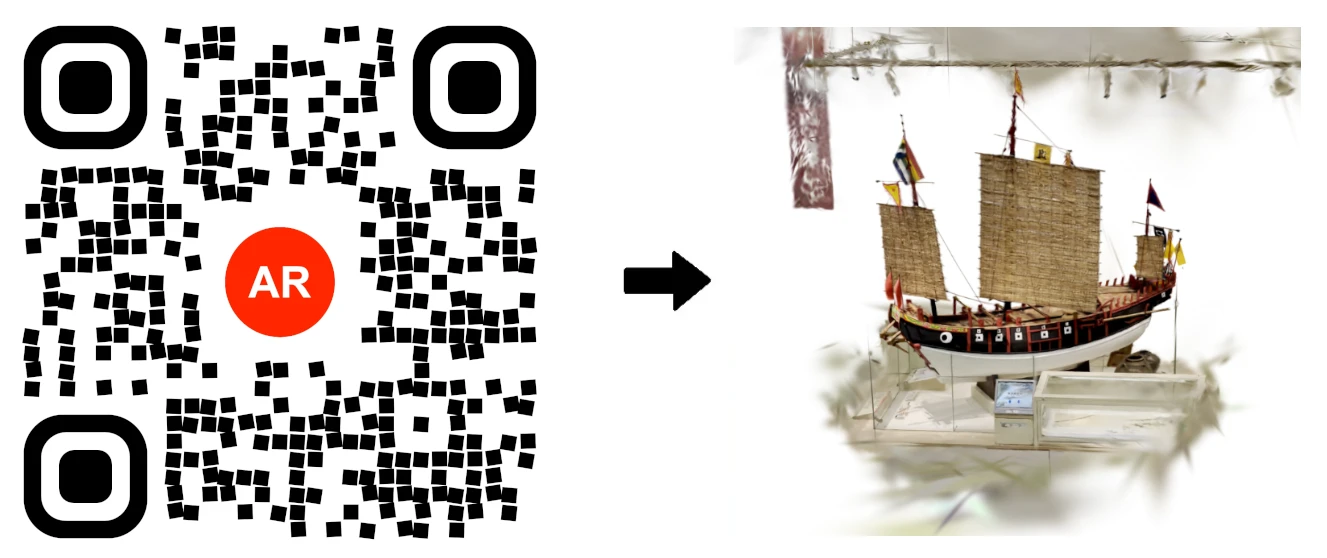
AR Code's existing AR Splat Gaussian splatting solution allows creators to turn suitable videos of real-world objects and spaces into interactive Gaussian splat scenes. These scenes can then be shared using AR QR Codes, allowing visitors to access the content through supported smartphones and other compatible devices.
For heritage organizations, this supports a straightforward approach to presenting digitally captured objects or environments. A historical exhibit, architectural feature, or selected interior can become an interactive 3D experience linked to a physical sign or printed guide.
AR Code also provides AR QR Code applications for smart cities and urban development, including interactive landmark information, tourism content, and digital communication in public spaces.
Importantly, AR Code currently uses QR Codes or direct links to launch experiences. It does not automatically recognize monuments or provide location-based alignment through geolocation.
The following official AR Code demonstration shows AR Splat being applied to museum-related 3D content and illustrates how Gaussian splatting can be presented through an AR experience.
Combining Gaussian Splatting with Virtual Heritage Tours
Not every heritage experience requires the same type of 3D content. A detailed reconstruction may be valuable when visitors need to examine surfaces and architectural features. A panoramic tour may be more suitable when the goal is to introduce an entire space.
AR Code's AR Portal solution for 360-degree virtual tours provides another option. It transforms 360-degree images into immersive environments that visitors can access through AR QR Codes.
This makes it possible to plan different digital experiences around distinct communication goals:
- Gaussian splatting: Present visually detailed 3D representations of suitable objects and spaces.
- 360-degree AR Portals: Offer panoramic previews of rooms, interiors, and visitor environments.
- AR QR Codes: Connect physical signs, brochures, and digital communication materials to the appropriate experience.
These approaches can complement traditional photographs, maps, written descriptions, and guided tours. The most appropriate format depends on the site's content, available source material, and intended audience.
How to Prepare a Mobile 3D Heritage Experience
The new research reinforces the importance of planning mobile performance before publishing a detailed 3D experience.
Heritage managers and digital content teams can use the following process when developing a pilot project:
- 1. Select a suitable subject. Choose a historic object, architectural detail, or manageable space that benefits from interactive viewing.
- 2. Prepare authorized visual material. Capture photographs, videos, or panoramic images while following conservation rules, access restrictions, and intellectual property requirements.
- 3. Create the digital experience. Use a suitable 3D capture workflow, AR Splat, or a 360-degree portal according to the desired presentation.
- 4. Optimize and test on mobile devices. Check file sizes, visual quality, loading behavior, and usability under realistic network conditions.
- 5. Publish clear access instructions. Place AR QR Codes on authorized signage, printed materials, or online resources, with a short explanation of the available content.
- 6. Evaluate the experience. Review scan activity and collect visitor feedback to understand whether the content is useful and easy to explore.
For an initial project, one well-prepared digital exhibit or architectural feature is generally easier to test and improve than a complete reconstruction of a large heritage complex.
The Opportunity for Mobile-Web 3D Heritage in 2026
The latest research adds practical evidence to the development of browser-accessible 3D cultural heritage. Smaller assets, detailed visual representations, and mobile delivery can help institutions extend access to historic places.
For museums, heritage sites, tourism agencies, and local authorities, the opportunity is to create useful digital experiences around existing collections and landmarks, while preserving the importance of authentic physical sites.
Organizations interested in this approach can explore AR Code's Gaussian splatting and AR QR Code capabilities, begin with a focused 3D heritage pilot, and expand based on real visitor needs and device testing.
Frequently Asked Questions
What is mobile-web 3D heritage visualization?
Mobile-web 3D heritage visualization allows people to explore digital representations of historic buildings, monuments, or cultural objects through a mobile browser. Depending on the implementation, visitors can navigate a 3D scene, examine visual details, and access supporting information without installing a dedicated application.
How does Gaussian splatting improve 3D heritage experiences?
Gaussian splatting creates detailed three-dimensional scenes from captured visual information. Research published in November 2026 found that optimized Gaussian splatting representations delivered strong visual-quality results for two historic architectural sites through mobile browsers. Actual performance depends on the model, optimization process, and device.
Can visitors explore historic sites with AR Code without downloading an app?
Yes. AR Code supports browser-based augmented reality experiences on compatible smartphones and other supported devices. Visitors can scan an AR QR Code or open its link to access published 3D content. AR Splat supports Gaussian splatting experiences, while AR Portal provides immersive environments created from 360-degree photographs.
How can museums and heritage organizations start using 3D AR QR Codes?
Start with one suitable artifact, architectural detail, or historic interior. Prepare authorized visual material, create an appropriate 3D or panoramic experience, test it on mobile devices, and publish the access link through a clearly labeled AR QR Code. Add historical explanations and gather visitor feedback before expanding to additional locations.
WebAR - Latest Blog Posts
Museum Augmented Reality: What 208 Studies Reveal About Better Visitor Experiences
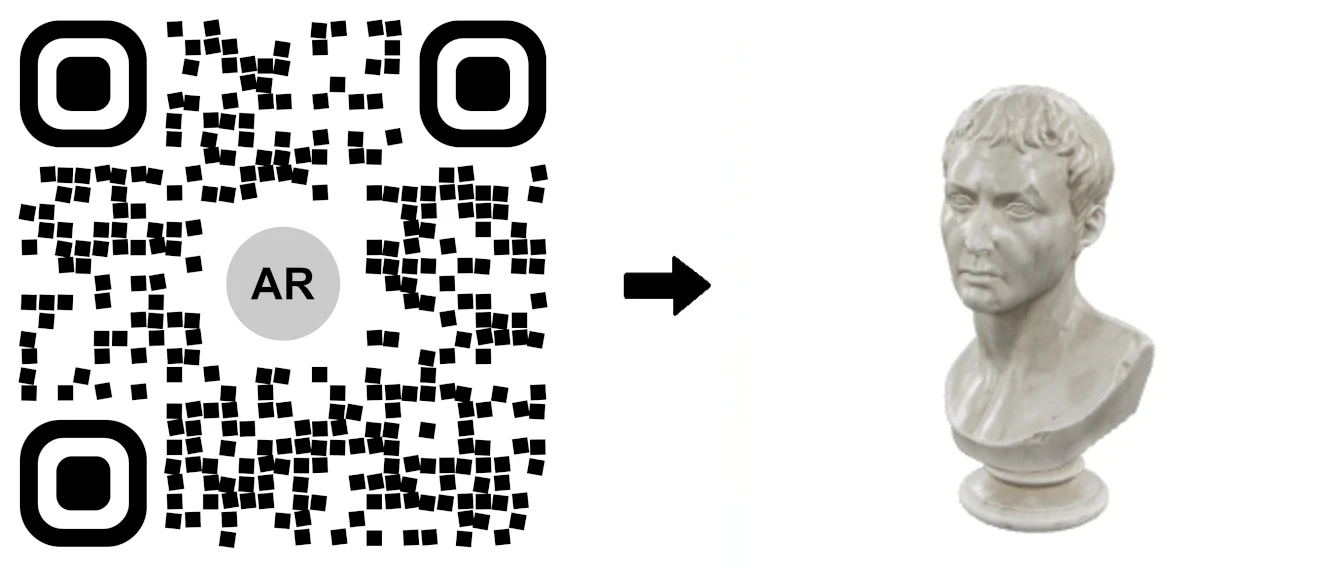
What if a museum visitor could explore a fragile historical object in 3D, discover the story behind a painting, or step inside a reconstructed exhibition space using only a smartphone? Augmented reality (AR) is making these experiences possible by adding digital objects and information to the world around us. And...
World Cup 2026 AR Face Filter Flags: App-Free AR QR Codes for Football Supporters

AR Code gives World Cup 2026 supporters an app-free AR Face Filter experience! By scanning a country-specific AR QR Code, fans can instantly display their national flag on both cheeks in augmented reality, directly from their smartphone browser. They can then capture the moment and share it with friends or on...
8th Wall Is Shutting Down: Timeline, Impact, and the Best 8th Wall Alternative for WebAR

With the 8th Wall shutdown on the horizon, businesses, agencies, and developers that depend on browser-based augmented reality must quickly secure a new partner to deliver WebAR experiences. As 8th Wall sunsets after seven years, finding a strong 8th Wall alternative is key for ongoing AR innovation and campaign...
3DQR vs AR Code: A Comparative Study of QR Code-Based Augmented Reality Solutions
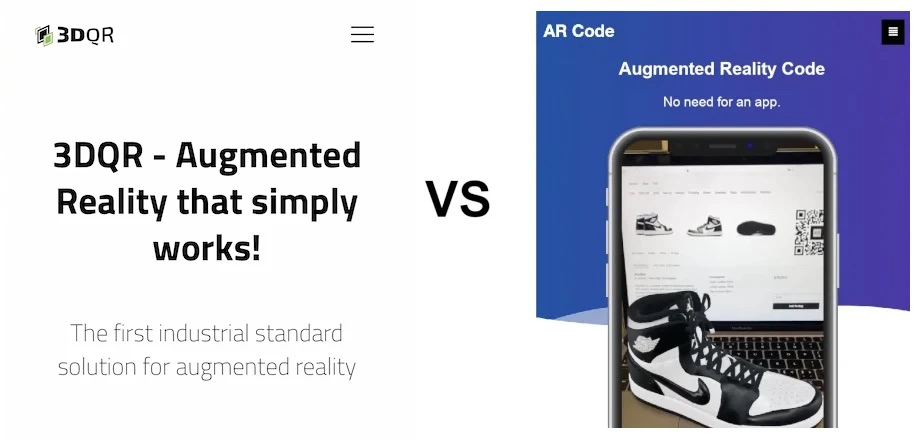
Augmented Reality is transforming how businesses operate and connect with customers. AR Code and 3DQR are leading AR SaaS platforms that empower businesses to deliver interactive digital experiences, foster stronger client relationships, and maximize ROI. This comparison details their key features and strategic...
Blippar VS AR Code: WebAR SaaS Platforms Compared
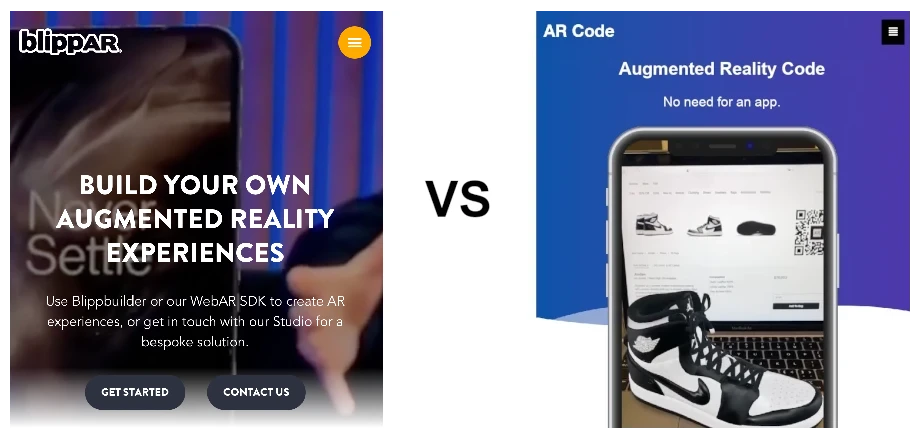
WebAR platforms like AR Code and Blippar are revolutionizing business-customer engagement by delivering interactive augmented reality experiences directly in web browsers. With no app downloads required, brands can amplify marketing, enhance product packaging, retail, and event interactions, and drive higher digital...
8thWall VS AR Code: Comparing WebAR SaaS for Your Business
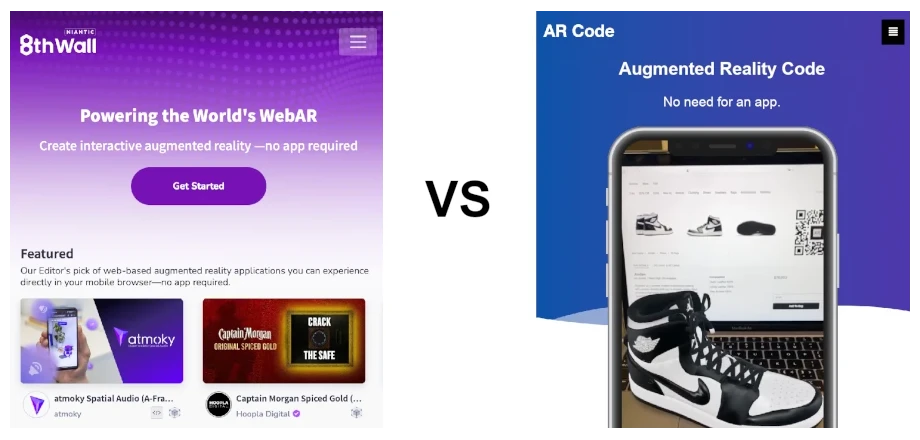
Web-based augmented reality (AR) is revolutionizing business marketing, sales, and product demonstrations by enabling browser-based AR experiences without an app. The AR Code SaaS platform empowers companies to deliver interactive AR directly through QR Codes, driving customer engagement in retail, e-commerce,...
162,992 AR experiences
73,300 Scans per day
148,861 Creators